Designing for Accuracy: What Goes Into a Modern Operating Room
Building or updating an operating room is one of the most complex undertakings in healthcare design. Every component, from ventilation systems to integrated technology, directly affects safety and performance. But the work goes beyond installing advanced equipment or meeting sterile requirements. The goal is to create a space where people, technology, and processes operate together with consistency and precision.
The foundation of a successful operating room project is laid well before construction begins. Early planning focuses on how surgical teams move through the space, communicate with one another, and interact with tools and equipment. Floor plans must allow for clear visibility, smooth movement, and ergonomic access to everything needed during a procedure.
Close collaboration between clinicians, architects, and engineers often includes detailed mock-ups or simulations to confirm that each element supports workflow. When this preparation is done thoroughly, the finished room aligns with both regulatory standards and real-world clinical demands.
Advancing medical technology introduces additional challenges. Equipment sizes and system requirements change frequently, making flexibility a critical design consideration. Features such as adaptable ceiling systems, modular wall assemblies, and scalable infrastructure allow facilities to update technology without major reconstruction. These design choices help operating rooms remain functional as innovations emerge, reducing disruption and extending the life of the space. The ability to adjust over time has become essential for maintaining high-quality patient care.
Clear communication throughout the project is just as important as physical design. Operating room builds involve coordination among many parties, including contractors, vendors, inspectors, and facility leaders. Small misalignments, such as incorrect equipment measurements or electrical placements, can lead to delays and added costs.
Digital project management platforms are increasingly used to keep everyone aligned by providing shared access to timelines, approvals, and documentation. When information is transparent and accessible, teams can prevent rework and keep projects moving forward.
Human performance remains at the center of effective design. The most successful operating rooms feel intuitive to use, supporting clinical teams during high-pressure situations. Lighting quality, sound control, and thoughtful equipment placement all affect focus, endurance, and safety. When these elements are designed with the user in mind, the room becomes a natural extension of the surgical team’s skill and coordination.
Every operating room should also be built with change in mind. Clinical practices evolve, infection prevention standards are refined, and new technologies continue to emerge. Designing for long-term adaptability ensures that spaces can respond to these shifts without requiring a complete overhaul. By approaching each project as a long-term investment, healthcare organizations can create operating rooms that continue to support performance, safety, and excellence in care for years to come.
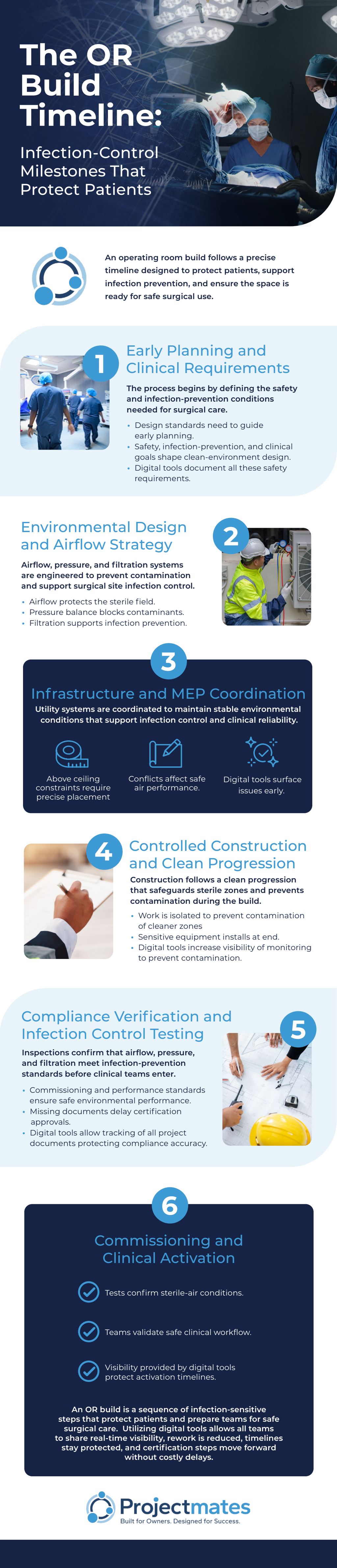
For additional insight into the process, stages, and coordination behind operating room construction, explore the accompanying infographic on managing critical environment projects from Projectmates, a provider of construction risk management software.