Bacteriostatic Water as a Pharmaceutical Diluent: Uses, Differences, and Safety
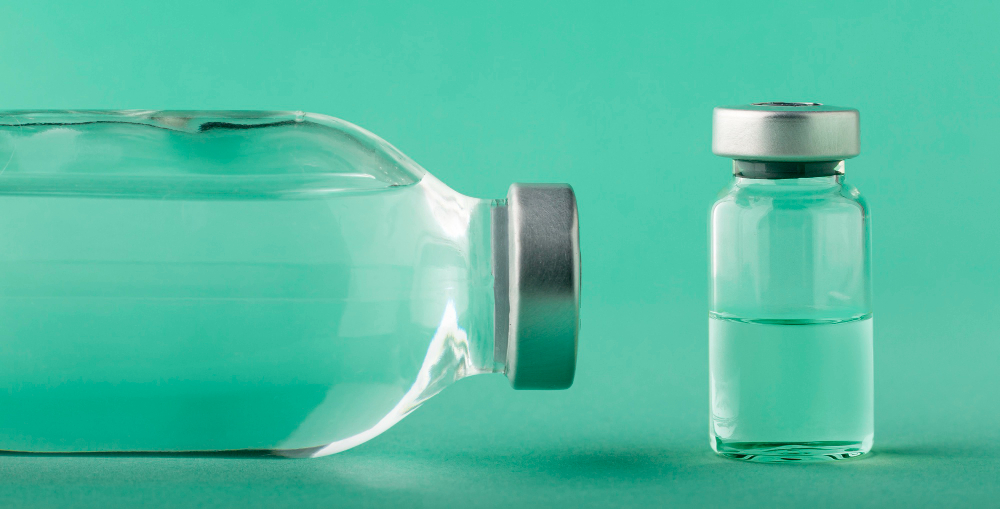
A vial labeled bacteriostatic water may look simple, but it is a regulated pharmaceutical diluent with a specific composition and a limited role.
It is not drinking water, saline, a general-purpose laboratory solvent, or a medication on its own. Its purpose is to dilute or dissolve certain injectable drugs when the drug manufacturer’s instructions identify it as an appropriate vehicle.
That distinction matters because diluents are not automatically interchangeable. The presence of a preservative, the route of administration, the patient population, the drug’s formulation, and the final concentration can all affect whether a preparation is suitable. Safe decisions begin with the drug label and professional guidance, not with a generic recipe.
What Bacteriostatic Water Contains
Bacteriostatic Water for Injection, USP is sterile, nonpyrogenic water for injection with benzyl alcohol added as a bacteriostatic preservative. The product page for Hospira Bacteriostatic Water identifies a 30 mL multiple-dose vial containing 0.9% benzyl alcohol. That description is consistent with labeling for the associated Hospira presentation listed through DailyMed.
The preservative is the defining difference between bacteriostatic water and preservative-free Sterile Water for Injection. It allows a properly handled multiple-dose container to support repeated withdrawals. It does not sterilize contaminated equipment, correct poor aseptic practice, or establish that the product is compatible with every drug.
Bacteriostatic water is also not isotonic by itself. Official labeling states that it must be made approximately isotonic before use. Intravenous administration without an appropriate solute may cause hemolysis. These warnings are important because the word “water” can make the product sound less consequential than it is.
How It Differs From Sterile Water For Injection
Sterile Water for Injection is preservative-free. It is supplied for use as a pharmaceutical aid when a drug’s directions call for it, but its lack of preservative affects how the container is handled after opening. A single-dose container should not be treated as a multiple-dose product simply because some liquid remains.
Bacteriostatic water contains benzyl alcohol and is presented in a multiple-dose container. That can be useful when repeated withdrawals from the diluent vial are appropriate, but only within the conditions established by labeling, organizational policy, and applicable professional standards.
The important point is not that one product is generally better. Each has a different composition. A medication may call for Sterile Water for Injection, bacteriostatic water, sodium chloride injection, or another specified diluent. Substituting one for another can alter concentration, stability, compatibility, tolerability, or the suitability of the finished preparation.
Normal saline is different again. It contains sodium chloride and is approximately isotonic at the familiar 0.9% concentration. That does not make it a universal replacement for either form of water. The manufacturer of the medication determines the suitable vehicle, volume, concentration, route, and handling conditions.
The Medication Label Controls The Choice
The bacteriostatic water label instructs users to consult the drug manufacturer’s directions for the choice of vehicle and the appropriate dilution or volume. This is the central safety rule. General information about a diluent cannot answer a product-specific compatibility question.
A pharmacist or other qualified professional should check several points before preparation:
* Does the medication label name bacteriostatic water as an acceptable diluent?
* Does it require a preservative-free vehicle instead?
* What volume and final concentration are specified?
* Which routes of administration are permitted?
* How should the reconstituted medication be stored?
* How long may that preparation be kept after mixing?
The last question is often misunderstood. The usable period for an opened diluent vial does not determine the usable period for the medication made with it. Once a drug is reconstituted, the drug manufacturer’s stability and storage directions govern that preparation. Official bacteriostatic water labeling says not to store reconstituted injectable drugs unless the manufacturer of the solute directs otherwise.
Patient Population And Route Restrictions Matter
Benzyl alcohol has been associated with serious toxicity in neonates. Official labeling states that solutions containing benzyl alcohol must not be used in that population. When water is required to prepare or dilute medication for a neonate, the label directs the use of preservative-free Sterile Water for Injection.
That warning should not be expanded into an improvised rule for every pediatric patient. Pediatric decisions depend on the specific patient, drug, dose, and labeling. The product label notes that safety and effectiveness have not been established in pediatric patients and repeats the neonatal restriction. Clinicians and pharmacists should make the applicable determination rather than relying on a broad online summary.
Route is equally important. The labeling says parenteral preparations containing benzyl alcohol should not be used in epidural or spinal anesthesia procedures.
It also states that the product is intended only for diluting or dissolving drugs for intravenous, intramuscular, or subcutaneous injection according to the drug manufacturer’s instructions. Bacteriostatic water should never be treated as an independently injectable fluid or a fluid-replacement product.
Multiple-Dose Does Not Mean Contamination-Proof
The term “bacteriostatic” means that the preservative inhibits bacterial growth under the product’s intended conditions. It does not guarantee that a vial remains safe after improper handling. A contaminated needle or syringe can carry microorganisms or other material into a vial. The preservative cannot be used as a substitute for aseptic technique.
Public-health injection guidance requires a new sterile needle and a new sterile syringe for access to a multidose vial. A needle or syringe used on a patient must never be returned to a medication or solution container. In clinical settings, multidose vials should be dedicated to a single patient whenever possible. CDC guidance says that a multidose vial entering an immediate patient treatment area must be dedicated to a single patient.
The stopper, container, and solution should be inspected as required by labeling and policy. Official labeling says not to use the product unless the solution is clear and the seal is intact.
A vial with unexpected particles, discoloration, damage, uncertain handling, or a compromised closure should be quarantined and assessed under the organization’s procedure rather than used because it has not reached the printed expiration date.
Understand Dates After First Access
The printed expiration date applies to an unopened product stored as labeled. Once a multiple-dose vial is first punctured, a beyond-use date may also apply. CDC injection-safety materials state that an opened multidose vial should generally be dated and discarded within 28 days unless the manufacturer specifies a different period. The beyond-use date should not extend past the manufacturer’s original expiration date.
That general standard does not replace the product label, facility policy, or pharmacy requirements. A manufacturer may provide a different instruction, and a compromised vial requires earlier disposal. Clear dating at first access helps users avoid relying on memory.
Storage conditions should also come from verified labeling. The DailyMed listing for the associated Hospira product states controlled room temperature of 20 to 25 degrees Celsius, or 68 to 77 degrees Fahrenheit. That is a reminder not to assume that every opened vial belongs in a refrigerator. The correct storage conditions are those on the actual container and package information in hand.
Sourcing And Verification
Product identity should be confirmed at receipt and again before use. Check the manufacturer, product name, concentration of preservative, container size, lot number, expiration date, seal, and storage requirements. Keep bacteriostatic and preservative-free water clearly separated if similar packaging creates a selection risk.
The seller’s page can help identify what is being offered, but a commercial description should be checked against the physical label and current manufacturer information. Healthcare organizations should also follow their purchasing, pedigree, storage, recall, and inventory-control procedures. If there is a discrepancy among the listing, outer package, vial, and official labeling, hold the product and contact the supplier or manufacturer.
Governance In Professional Settings
Clinics, pharmacies, and research organizations should turn label requirements into written procedures rather than relying on individual memory. Staff training can cover product selection, segregation of similar-looking containers, first-access dating, storage, visual inspection, and disposal. Competency checks are especially useful where several diluents are stocked in the same area.
Incident and near-miss reporting also matters. Selecting the wrong water but catching the error before administration can reveal a packaging, placement, or workflow problem. Reviewing such events without waiting for harm allows an organization to separate products, improve labels, adjust inventory locations, or add an independent check at the point of preparation.
Documentation should identify the specific diluent used when required by policy, including relevant lot information in settings where traceability is necessary. If a recall or quality concern arises, accurate records make it easier to determine which inventory and preparations are affected. These controls do not replace clinical judgment, but they create a safer environment in which that judgment can be applied.
A Safer Framework For Questions About Use
People often ask which water to use, how much to add, or how long a mixed vial lasts. Those questions cannot be answered responsibly without knowing the exact medication and its approved instructions. A practical framework is straightforward:
1. Identify the exact drug, strength, dosage form, and manufacturer.
2. Read its current prescribing information or package insert.
3. Confirm the named diluent and required volume.
4. Check patient and route restrictions.
5. Follow the stated preparation, storage, and use period.
6. Ask a pharmacist or prescriber when any detail is unclear.
This approach avoids two common errors: choosing a diluent because it is convenient and borrowing directions from a different product. Even drugs with similar names or presentations can have different preparation requirements.
Bacteriostatic water is useful because its benzyl alcohol preservative supports its labeled multiple-dose role. That same ingredient introduces restrictions that do not apply in the same way to preservative-free sterile water. Understanding both sides of that distinction is essential. The vial’s label, the medication manufacturer’s instructions, and qualified professional guidance should remain the controlling sources for every preparation decision.
