How To Get Hospice Care At Home While Working With Your Doctors And Hospitals
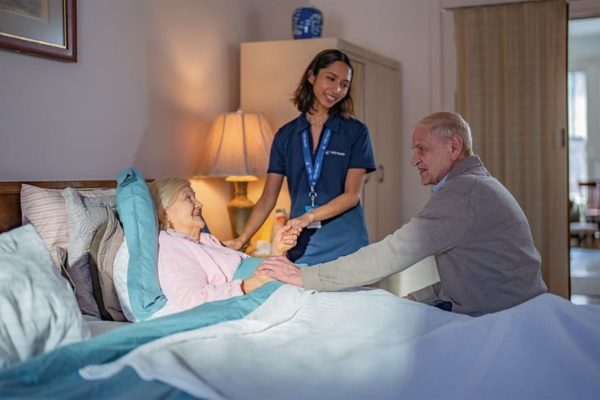
Getting hospice care at home offers a deeply personal and coordinated approach when it comes to working with your doctors and hospitals.
However, the process is not about replacing your current medical team. Moreover, this involves building a bridge between comfort, care, and the healthcare system you already trust.
This article seeks to enlighten people about the benefits of Hospice care. Therefore, let us break down the thighs for more clarity.
Moreover, we should use real-life examples and a storytelling lens to understand how this connection works.
1. A Story From The Heart Of Rural Georgia
A 74-year-old man named Mr. Jennings was recently diagnosed with late-stage heart failure.
However, he’d been in and out of the hospital three times within the last two months.
His daughter couldn’t be there every day, as she lived two hours away. However, she hated seeing him struggle between doctors, unfamiliar nurses, and long wait times.
Thus, they entered hospice care at home to make things easier for themselves.
Therefore, a care team started coordinating directly with his cardiologist and primary physician within days of opting for Hospice care.
However, they didn’t ask for new tests or start from scratch. The team started working for the betterment of the patient while continuing with the treatment.
The hospice care at HomeTeam read his existing records, spoke to his doctors, and created a plan that worked with the treatment he’d already been given.
Appling Hospice Care brings this kind of transition to life — gently, smoothly, and without overwhelming the patient or family.
2. Collaboration Starts On Day One
The first step in getting hospice care at home is a conversation, not a checklist.
A nurse or coordinator will reach out to your primary care physician or specialist to review your condition.
This includes your medical history, prescriptions, recent lab work, and hospitalizations.
Why is this important?
Because patients like you deserve continuity.
Moreover, your care shouldn’t feel like you’re starting over just because you switched to a new form of treatment.
Hospice teams work with your existing providers, not around them.
The hospice care at home team launches a collaborative effort. Therefore, the team ensures no detail gets lost, especially not the ones that matter most to your comfort.
3. What The Doctors Actually Do
Several expert doctors help in the treatment of the patients. The list includes oncologists, cardiologists, and neurologists. However, they stay in the loop.
These experts have been seeing the patients, hence they take part in decision-making.
As a result, the hospice care at home team consults the doctors when medications need to be adjusted or stopped.
In fact, many hospice teams include a physician who coordinates with your specialist to monitor symptoms and ensure pain management is on track.
Think of this like a group project where every player has the same goal: comfort, dignity, and quality of life.
4. Real-Life Example: When Hospitals and Hospice Work Together
Let’s take Lila, a 63-year-old cancer patient who spent weeks in a city hospital.
After months of chemo, her body was exhausted.
She didn’t want to keep returning for blood tests or emergency admissions.
Her oncologist recommended hospice.
Instead of cutting ties with the hospital, the hospice team coordinated a smooth discharge.
They arranged a hospital bed at home, delivered her medication, and sent a nurse to walk the family through symptom management.
They even kept her hospital team informed.
This way, her original doctors stayed involved — but from a distance that gave her peace.
5. What About Emergencies?
Here’s the honest truth: emergencies happen.
But hospice care changes how you deal with them.
Instead of rushing to the ER at 2 AM because of breathing issues, you call your hospice nurse.
They’re trained to handle crisis situations at home.
Still, if a hospital visit becomes absolutely necessary, hospice teams communicate directly with ER doctors and advocate on your behalf.
You never walk into a hospital blind again.
They know who you are, what you need, and what your preferences are.
6. Does Hospice Mean You Can’t See Your Doctor?
Not at all.
In fact, many patients keep regular check-ins with their trusted physicians.
Your primary care doctor might still visit you.
They may even consult virtually or by phone with the hospice team to tweak medications or manage conditions like diabetes, infections, or anxiety.
In some rural areas, hospice teams even drive patients to appointments if needed.
That’s the beauty of this support system — it adapts to your life, not the other way around.
7. The Role Of Electronic Medical Records (EMRs)
A key player behind the scenes is technology.
Hospice care relies on electronic health records to stay updated on hospital discharges, lab reports, and prescriptions.
This eliminates redundancy.
No more redoing tests.
No more retelling your medical history five times a day.
Your care is shared, not duplicated.
8. How Families Feel the Difference
Families often don’t realize how chaotic care coordination can be — until it’s fixed.
With hospice, there’s a single phone number to call.
There’s no running between hospital floors, waiting on doctors, or wondering if everyone’s on the same page.
The hospice service at home team conducts care conferences regularly.
The hospice care at home treats your loved ones as part of the team, not just visitors.
9. Behind the Scenes: Hospital Partnerships
Hospice care at home agencies often partner with local hospitals through written agreements.
This ensures a smooth transition of care when a patient leaves a hospital and begins hospice services.
The team streamlines communication during a patient’s readmission.
The teams for hospice care at home manage the bills collaboratively. Therefore, this reduces stress for families who are already navigating enough.
Final Thoughts: It’s A Two-Way Street
Getting hospice care at home doesn’t mean stepping away from modern medicine.
It means embracing the parts that help — and letting go of the ones that don’t.
Whether it’s through in-home care or coordinating with hospital discharge teams, the approach is deeply respectful of what came before.
You don’t have to abandon your doctors.
You don’t have to stop treatment that brings comfort.
Getting hospice care at home simply makes sure that every piece fits together, and that you, the patient, are always the center of the story.
Patients love receiving the best treatment in the comfort of their home. Therefore, this is always an avenue that can be explored by the critical patients.