Beneath The Surface: How Indoor Pool Environments Can Affect Respiratory Health
When it comes to pool safety, most people think of lifeguards, slip-resistant floors, and clean water.
However, one often-overlooked concern is the air quality around indoor or commercial pools. Improper chemical handling, outdated ventilation systems, and aging infrastructure can quietly introduce respiratory hazards for swimmers and staff.
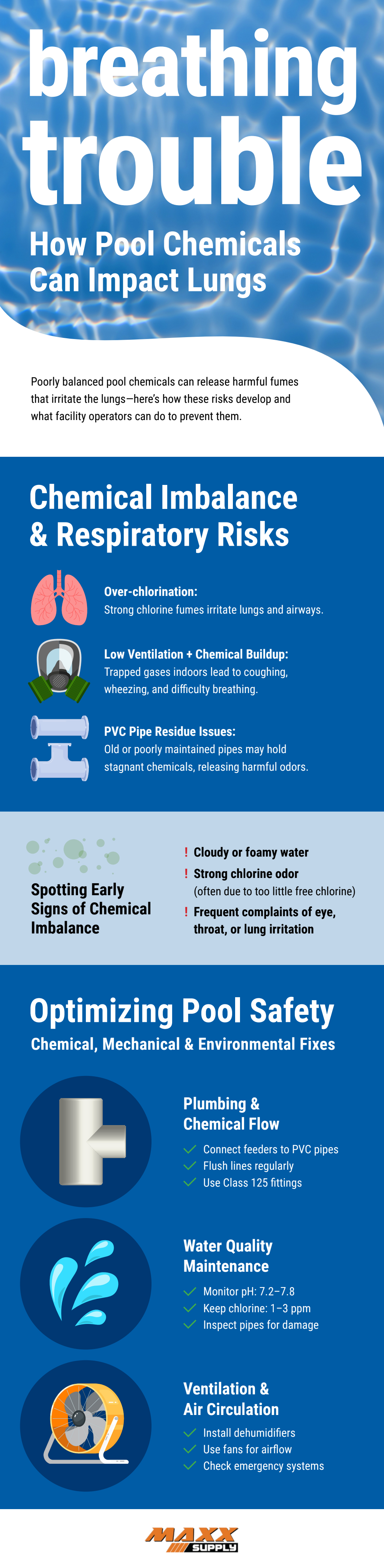
Even with proper water care, harmful airborne compounds can form if supporting systems aren’t functioning optimally. Chlorine, for example, reacts with organic contaminants like sweat or urine to create chloramines—strong-smelling gases that float just above the water’s surface.
These byproducts can lead to irritation of the eyes, nose, and lungs. Since they’re so easy to inhale, people who spend extended time near the pool—especially staff and frequent swimmers—may be at greater risk of chronic exposure.
Compounding Factors: Ventilation And Vulnerable Populations
The problem worsens in enclosed pool environments that lack effective airflow. Without proper air exchange systems or dehumidifiers, chloramines accumulate, creating stale, irritant-heavy air.
This environment is particularly concerning for young children, seniors, or anyone with asthma or other breathing conditions. What’s more, these symptoms are frequently dismissed as a typical poolside experience, masking deeper infrastructure problems that require attention.
Plumbing And Chemical Distribution: The Infrastructure Impact
The plumbing and chemical distribution system also plays a key role in indoor pool air quality. PVC piping is a common standard in commercial pools, but over time, it can degrade or develop residue.
Poorly flushed lines or inconsistent fittings can trap chemicals that eventually contribute to air pollution. Likewise, leaks or faulty feeders may create chemical imbalances that lead to inconsistent treatment—and more lingering fumes.
Prevention Through Smart Design And Maintenance
The good news is that these risks are largely preventable. With regular inspections and routine flushing of plumbing systems, facilities can prevent chemical buildup. Using industrial-grade PVC materials, ensuring proper fittings, and maintaining flushing schedules go a long way in protecting air quality.
Just as important is investing in high-performing ventilation systems. Fans, air handlers, and humidity control systems should be considered essential parts of pool operations, not afterthoughts.
Beyond The Water: Air Safety As A Priority
Maintaining a safe pool goes far beyond keeping the water clear. Ensuring that the surrounding air is clean and breathable is critical for the health of everyone using the space.
With the right maintenance routines, system upgrades, and a focus on air management, facilities can create an indoor pool experience that’s as healthy above the water as it is below it. For more on this, check out the accompanying resource from Maxx Supply, a provider of PVC butterfly valves.