Wellness in the Water: The Surprising Benefits of Aquatic Activities
In a world where busy schedules often dominate, discovering ways to support your physical and mental health is more important than ever. While traditional workouts get most of the spotlight, there’s a powerful wellness ally that often goes overlooked — water.
From swimming laps at your local pool to casting a line in a quiet lake or paddling across calm waters, aquatic activities provide an impressive blend of physical conditioning and mental restoration. These water-based pursuits go far beyond casual fun — they’re a gateway to long-term health and well-being.
What Makes Water-Based Activities So Effective?
Water-based movement stands apart because it offers a high-reward, low-impact workout accessible to nearly everyone. Whether you’re a seasoned athlete, recovering from an injury, or just looking to unwind, water provides a unique environment for full-body engagement without strain.
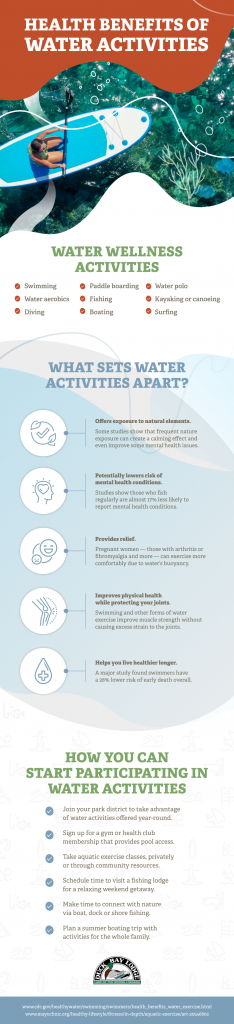
1. Joint-Friendly Fitness for All Ages
Swimming, water aerobics, and kayaking provide robust cardiovascular and strength training without the wear and tear of land-based workouts. Because water cushions joints, these activities are ideal for seniors, people with arthritis, or anyone dealing with chronic pain or past injuries.
2. A Mental Reset by the Water
The gentle rhythm of swimming or paddling — paired with the soothing sights and sounds of water — has a calming effect on the mind. Research shows that being near or in water can reduce stress levels, improve mood, and promote mindfulness. Simply spending time by a lake or stream can foster mental clarity and emotional balance.
3. Emotional Wellness Through Slower Moments
Activities like fishing offer a slower pace with surprising benefits. Studies show that people who fish regularly are nearly 17% less likely to experience mental health concerns. The combination of fresh air, calm water, and reflection helps ease anxiety and restore mental energy.
4. Comfort for Special Health Conditions
Expecting mothers, people recovering from surgery, and those with limited mobility often find water-based therapy easier to manage than traditional exercise. The buoyancy of water reduces pressure on the body, helping participants move more freely while supporting overall comfort and recovery.
5. Longevity Through Movement
Swimming in particular offers one of the most sustainable forms of long-term fitness. A major study found that swimmers have a 28% lower risk of early mortality — proving that regular water-based activity is not only good for today but also supports a longer, healthier life.
Easy Ways to Get Started
You don’t need a beach house or fancy equipment to take advantage of water activities. Here are a few beginner-friendly ideas:
- Join a local pool or park district offering aquatic programs like swim lessons or aqua fitness classes.
- Check out gym memberships that include access to indoor pools and water-based group workouts.
- Explore aquatic fitness classes, such as water yoga or aerobics — ideal for all ages and skill levels.
- Plan a fishing trip to reconnect with nature while enjoying quiet and stillness.
- Take a kayaking or paddleboarding outing for a full-body workout and a fresh perspective on the outdoors.
- Create a family boating day with swimming and play that’s enjoyable and active for all ages.
A More Balanced Life, One Splash at a Time
Water activities offer a powerful path to better health. They’re easy on the body, soothing for the mind, and uplifting for the spirit. Whether you’re easing into a new routine or looking for a fun way to reconnect with wellness, the water welcomes you.
So go ahead — dive in. The benefits ripple far beyond the surface. Want to learn more about water wellness activities? Check out the accompanying resource from Duck Bay Lodge, a Lake of the Woods fishing lodge.