The Stress-Alignment Link: How Emotional Strain Affects Your Physical Posture
In our always-on world, stress is a constant companion. Whether it stems from long workdays, personal demands, or too much time in front of a screen, the effects show up not just in our mood, but in our bodies. While most people recognize the emotional toll of stress, fewer realize just how deeply it can impact posture, muscle function, and physical alignment.
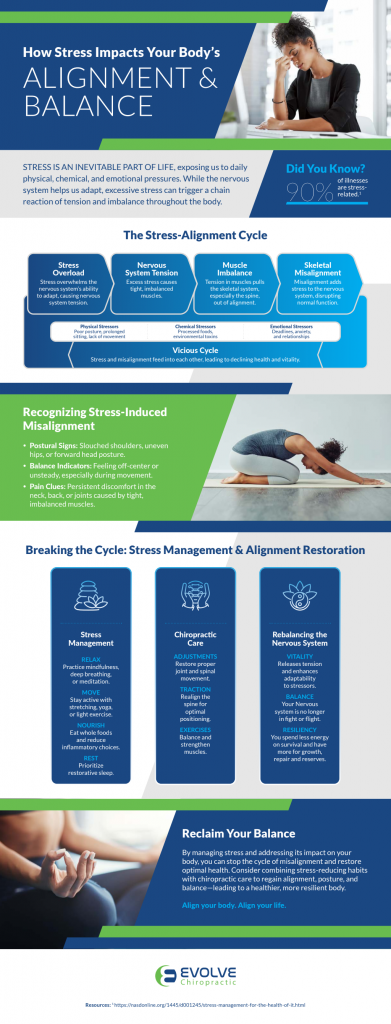
When stress takes hold, the body often responds by tightening muscles and shifting into protective positions. Over time, these subtle responses can cause serious structural imbalances — particularly in the spine and major joints — that fuel long-term discomfort and make it harder to break the stress cycle.
Physical Signs That Stress Is Disrupting Alignment
Stress is more than a mental state — it triggers a full-body reaction. As your nervous system shifts into high alert, muscles contract, breathing shortens, and posture begins to shift. This constant tension leads to uneven pressure on bones and joints, especially the spine, creating misalignments that worsen over time.
Some of the telltale signs include:
- Rounded shoulders and poor posture
- A forward-leaning head or neck
- Persistent stiffness in the hips or lower back
- A general sense of imbalance when walking or standing
At first, these issues may seem minor. But left unaddressed, they can lead to chronic pain and make it even harder for the body to relax and recover.
Why Alignment Matters for Total Health
When your body is misaligned, it’s not just your back that suffers. Imbalances in posture can strain the nervous system, affect digestion, and even interfere with your immune response. Research shows that unmanaged stress is a contributing factor in a wide range of illnesses — meaning alignment and mental health are more connected than they appear.
If misalignment becomes chronic, the body has to work harder just to function. This drains energy, impacts sleep, and keeps the nervous system stuck in a reactive state, making future stress harder to manage.
Rebalancing the Body & Mind
Fortunately, there are proven ways to reverse this pattern. Restoring alignment while also managing stress can improve both physical and emotional well-being. Here’s how to start:
- Mindfulness & Breathwork: Practicing deep breathing or meditation calms the nervous system and releases muscular tension.
- Gentle Movement: Activities like yoga, tai chi, and walking are effective at easing tight muscles and improving posture.
- Nutritional Support: Whole foods that reduce inflammation and nourish muscles (think magnesium-rich greens, omega-3s, and lean proteins) can support recovery.
- Consistent Sleep: Rest gives your body the chance to repair itself and reset stress levels.
- Chiropractic or Bodywork Care: Professional adjustments and therapeutic exercises can realign the spine and relieve nerve pressure, enhancing your body’s resilience.
Reclaiming Balance from the Inside Out
Postural pain and persistent tension aren’t just physical problems — they’re often stress signals hiding in plain sight. By paying attention to how stress is showing up in your body and taking steps to improve alignment, you create a powerful ripple effect across your health.
A more balanced, upright posture isn’t just about looking confident — it’s about feeling better, inside and out. Support your structure, and your entire system will function more freely, giving you the strength to face life’s pressures with calm and clarity. For more on this, check out the infographic below from Evolve Chiropractic, a chiropractor Schaumburg residents can trust.